The Ultimate Guide to Filing a Patent Application
In today’s competitive market, protecting your intellectual property is more important than ever. A patent not only safeguards your invention but also grants you exclusive rights to capitalize on it. However, the process of filing a patent application can be daunting. This guide aims to demystify the procedure, making it accessible and straightforward.
Understanding the Basics of Patents
What is a Patent?
A patent is a legal document that grants the inventor exclusive rights to use, sell, and manufacture an invention for a specified period. It is crucial for protecting the intellectual property of individuals and businesses.
Types of Patents
- Utility Patent: Covers new and useful inventions or discoveries.
- Design Patent: Pertains to new, original, and ornamental designs for an article of manufacture.
- Plant Patent: Applied to new and distinct varieties of plants.
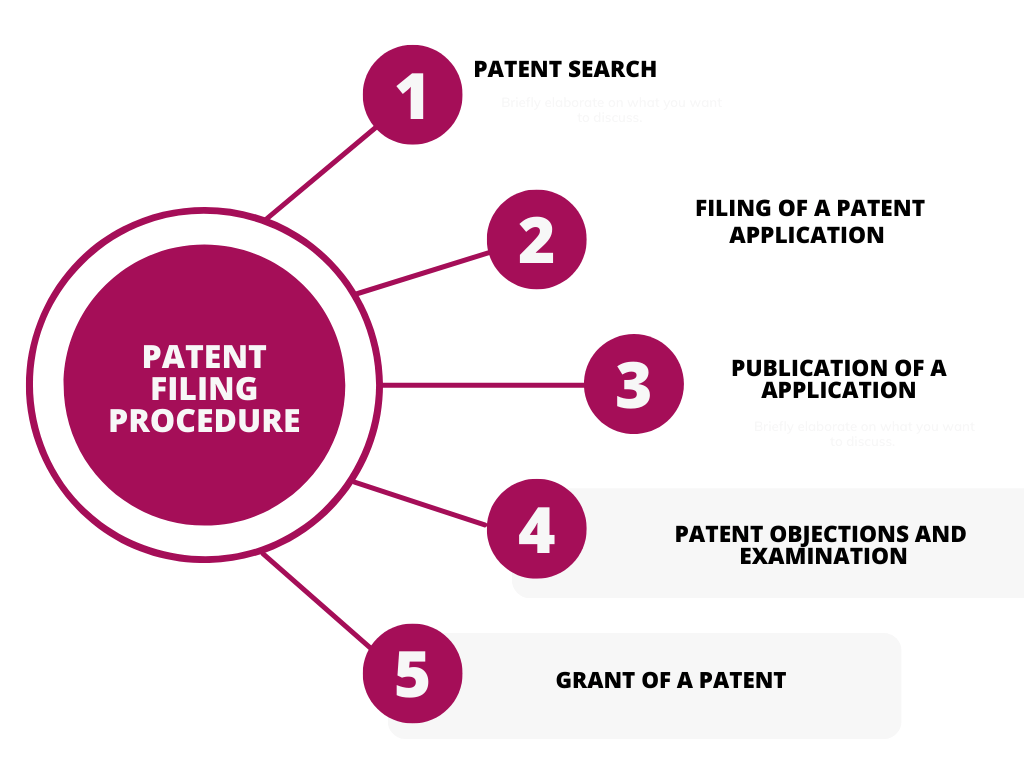
Steps to Filing a Patent Application
Conduct a Thorough Patent Search
Before filing a patent application, it’s essential to ensure that your invention is novel. Conducting a comprehensive patent search helps identify any existing patents that may be similar to your invention. Discover expert strategies here for conducting an effective patent search.
Prepare the Patent Application
- Title of the Invention: A concise and descriptive title.
- Abstract: A brief summary of the invention.
- Background: Context and background information on the invention.
- Detailed Description: A comprehensive description of the invention, including diagrams and illustrations.
- Claims: Define the scope of the patent protection requested.
For tailored solutions on preparing a patent application, learn about our tailored solutions.
Submit the Application to the Patent Office
Once the application is prepared, it must be submitted to the relevant patent office. This process typically involves:
- Paying the necessary filing fees.
- Submitting the completed application forms and documents.
- Including any required supplementary materials.
Post-Submission Process
Patent Examination
After submission, the patent office will examine the application to ensure it meets all legal requirements. This examination includes:
- Reviewing the application’s compliance with formal requirements.
- Conducting a substantive examination to assess the novelty and inventive step.
For more insights on navigating the examination process, explore advanced guides and tips.
Responding to Office Actions
If the patent office raises any objections or requires additional information, the applicant must respond appropriately. This often involves:
- Amending the application to address specific concerns.
- Providing additional evidence or arguments.
To understand how to effectively respond to office actions, find out more about this approach.
Receiving the Patent Grant
Upon successful examination and resolution of any objections, the patent office will grant the patent, officially recognizing the applicant’s rights over the invention.
Conclusion
Filing a patent application is a crucial step in protecting your invention and ensuring its commercial success. By understanding the patenting process, conducting thorough searches, and preparing a comprehensive application, inventors can navigate the complexities of patent filing with confidence and ease. Remember, securing expert guidance can significantly enhance your chances of a successful patent application.
