In any culinary setting, whether it be a professional kitchen or a home environment, the importance of maintaining an organized space cannot be understated. The efficiency and safety of food preparation greatly depend on how well the kitchen is organized. One of the most essential aspects of this organization is the proper storage of knives. A knife holder not only prolongs the life of the knives but also ensures ease of access and safety. Choosing the right knife holder can be a daunting task given the myriad of options available. This article aims to guide you through the essential considerations and types of knife holders that will best suit your kitchen”?s needs.
Why a Knife Holder is Essential
The primary function of a kitchen knife holder is to provide a safe and efficient way to store knives. Here are some benefits of using a knife holder:
- **Safety**: Keeps the sharp edges away from fingers, reducing the risk of accidental cuts.
- **Organization**: Helps maintain a clutter-free countertop, making cooking more efficient and enjoyable.
- **Protection**: Prevents the blades from getting dull due to friction with other utensils.
- **Aesthetic Appeal**: Enhances the overall look of the kitchen with its design.
Types of Knife Holders
Magnetic Knife Strips
Magnetic strips are mounted on the wall and the knives adhere to them. They are ideal for kitchens with limited counter space.
- **Pros**: Space-saving, displays knives visibly for easy selection.
- **Cons**: Might not be suitable for households with young children due to exposed blades.
Traditional Knife Blocks
Knife blocks are the most common type of knife holder. They are typically made from wood and have slots for different types of knives.
- **Pros**: Provides excellent protection for blades, available in various designs like a wooden knife block.
- **Cons**: Takes up more counter space, not always suitable for all knife types.
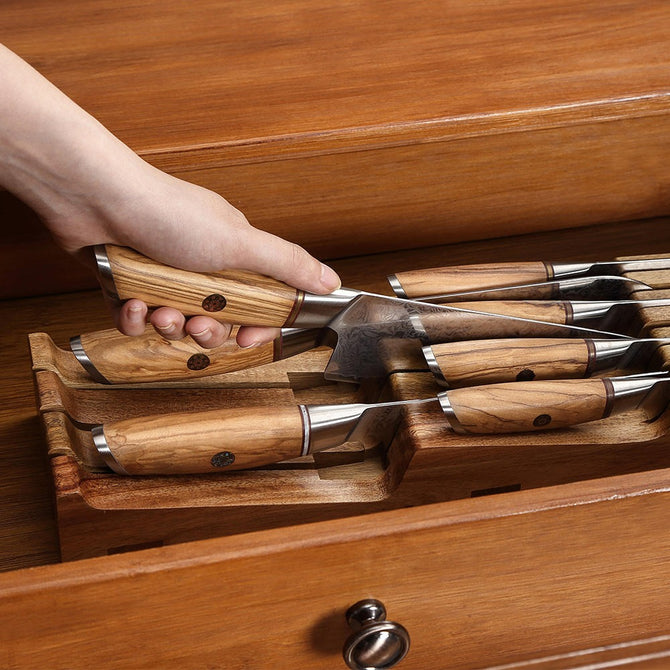
In-drawer Knife Holders
These are designed to fit inside kitchen drawers, keeping knives out of sight but easily accessible.
- **Pros**: Maximizes counter space, keeps knives safe from children.
- **Cons**: Requires a dedicated drawer space.
Knife Blocks Without Knives
Some chefs prefer to purchase knife blocks without knives to customize their knife collection.
- **Pros**: Flexibility to choose individual knives that best suit personal needs.
- **Cons**: May require additional effort to find compatible knives.
Considerations When Choosing a Knife Holder
Choosing the right knife holder involves considering various factors that align with personal preferences and kitchen needs.
- **Size and Capacity**: Ensure the holder fits the kitchen space and accommodates all knives.
- **Material**: Opt for materials that are easy to clean and durable, such as bamboo or stainless steel.
- **Design**: Select a design that complements the kitchen”?s aesthetics.
- **Safety Features**: Consider holders with child-proof features if necessary.
Conclusion
Investing in a quality kitchen knife block is a smart decision that enhances kitchen safety and efficiency. By understanding the types of holders available and considering personal kitchen dynamics, choosing the perfect knife holder can become a seamless process. Remember, the right knife holder not only organizes your kitchen but also extends the lifespan of your knives, making it an essential tool for any cooking enthusiast.
