Embarking on a bathroom renovation can be an exciting yet daunting task. One of the essential first steps is the demolition process, which sets the stage for the transformation of your space. Whether you’re looking to update your current bathroom or create a brand-new oasis, understanding the intricacies of bathroom demolition is crucial. This guide offers practical tips and tricks to help you navigate the demolition process efficiently and safely.
Preparing for Bathroom Demolition
Preparation is key to a successful demolition. Before you begin tearing down walls or removing fixtures, consider the following steps:
- Plan and Design: Outline your vision for the new space to ensure you remove all necessary components.
- Gather Tools and Equipment: Common tools include hammers, pry bars, screwdrivers, and safety gear like gloves and goggles.
- Secure Permits: Check with local authorities to determine if you need permits for structural changes.
- Shut Off Utilities: Turn off water and electricity to avoid accidents during demolition.
- Protect Surrounding Areas: Use plastic sheeting or tarps to cover floors and furniture outside the demolition zone.
Executing the Demolition
Once prepared, it’s time to execute the demolition. Here are essential tips to follow:
Removing Fixtures
- Toilets: Drain the tank and bowl, disconnect the water supply, and remove floor bolts to lift the toilet out.
- Sinks: Disconnect plumbing, remove fasteners, and carefully lift the sink from its position.
- Bathtubs: Depending on the type, you may need to cut the tub into smaller pieces for easier removal.
Demolishing Walls and Tiles
- Drywall: Use a utility knife to cut sections of drywall, then pry it away from the studs.
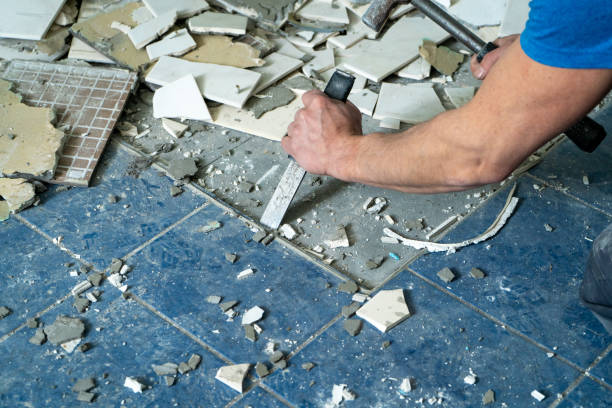
- Tiles: Start removing tiles from the top down using a hammer and chisel, being cautious of underlying surfaces.
- Backer Board: After tiles, remove the backer board to access wall studs.
Safety Considerations
Safety should always be a priority during demolition. Here are some tips to ensure a safe work environment:
- Wear Protective Gear: Always use gloves, safety goggles, and masks to protect against dust and debris.
- Use Proper Tools: Ensure all tools are in good condition and suitable for the task at hand.
- Be Mindful of Asbestos: If your bathroom is in an older property, consider professional assessment for asbestos before demolition.
Disposing of Demolition Waste
Proper disposal of debris is not just environmentally responsible but often required by local regulations. Consider the following:
- Rent a Dumpster: For large amounts of debris, a dumpster can be a convenient disposal solution.
- Recycle Materials: Check with local recycling centers for materials like metal and glass.
- Hazardous Waste: Dispose of hazardous materials like old paint and chemicals through designated facilities.
Final Thoughts
Bathroom demolition is a pivotal step in the renovation process that requires careful planning and execution. By following the tips and strategies outlined in this guide, you can ensure a smooth and efficient demolition. Remember, when in doubt, consulting with professionals or experienced contractors can provide additional peace of mind and expertise. For more on the topic, consider exploring resources on bathroom demolition for further insights.
